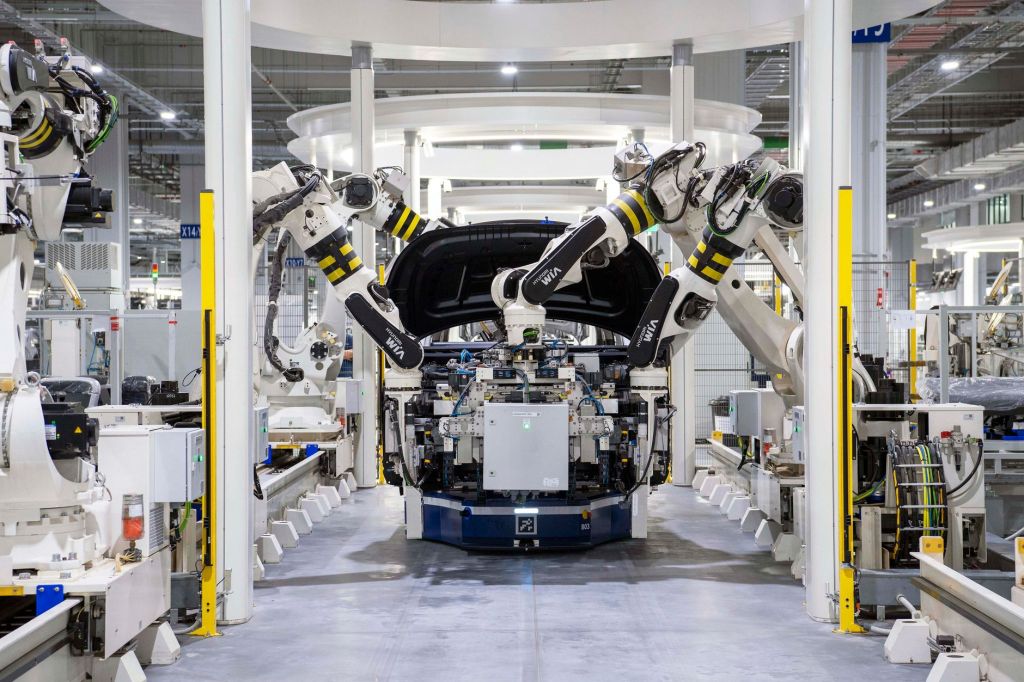
For plant leaders, supervisors, and frontline operators, industrial workforce transformation is no longer a future concept, it’s showing up in daily schedules, training plans, and performance expectations. The core tension is clear: smart factory technology and the manufacturing automation impact are accelerating faster than many teams can absorb, while production targets still can’t slip. As an employee, role evolution moves work from repetitive tasks toward monitoring, diagnosing, and improving connected systems, the digital skill requirements for once-familiar jobs are changing in real time. The payoff is a clearer view of where people create value as factories get smarter.
Understanding AI’s Real Impact on Factory Jobs
AI in manufacturing rarely means “people out, machines in.” It changes what work looks like by shifting humans from repeating the same motions to guiding, checking, and improving automated processes. With human-machine collaboration, software can surface patterns and recommendations, while people make context-based calls when conditions change.
This matters because even if automation grows, the work does not simply disappear. The idea that 50% of current work activities could be automated by 2050 points to task reshuffling, not instant job erasure. Workers who can interpret digital signals and act fast often become the difference between smooth output and costly downtime.
Think of a quality operator who stops measuring every part by hand. Sensors and AI flag drift early, and the operator decides whether to adjust settings, pause the line, or escalate maintenance. That kind of decision support depends on fast local processing close to the machines.
Build Real-Time Factory Intelligence With GPU-Ready Edge Servers
When people stay in the loop, the speed of the information they can act on becomes just as important as the automation itself. Edge servers make that possible by processing factory data locally in real time, so insights and alerts don’t have to wait on round trips to the cloud. That reduces latency, supports faster decision-making on the floor, and helps workers collaborate more effectively with automated systems and AI-driven tools, monitoring performance, troubleshooting issues, and adjusting operations with immediate feedback. A concrete example is the Axial AX300 rackmount server, a high-performance rackmount edge server engineered for complex workloads in demanding IT and OT environments. As a scalable industrial rackmount edge server with filtered fan, it’s designed to bring robust compute closer to where data is generated. With support for Intel Xeon processors, multiple GPUs, and extensive storage and expansion options, it can run advanced analytics, AI workloads, and virtualization at the edge. Its scalable architecture and built-in security features also help organizations deploy powerful on-premise computing in environments where reliability and control matter.
Smart Factory Job Changes: Common Questions Answered
Q: What happens to my job when more automation is added?
A: Many roles shift toward overseeing systems, handling exceptions, and improving processes rather than repeating manual steps. Because 85 million jobs may be displaced by technology, it is smart to ask early which tasks are changing and what new responsibilities are opening up. Ask your manager for a clear role map and a timeline for training.
Q: How hard is it to reskill if I am not “techy”?
A: Reskilling usually starts with practical workflows like using dashboards, following digital work instructions, and basic troubleshooting. Break learning into small weekly goals and request coached practice during real production, not just classroom time. Pairing with a peer mentor often speeds confidence.
Q: What does human machine teamwork look like day to day?
A: Machines handle repetitive sensing and alerts, while people validate issues, choose safe interventions, and adjust priorities. A good routine is check the alert, confirm with a quick inspection, apply the standard fix, then log the outcome.
Q: Why should I trust upskilling programs to be worth my time?
A: Many workers report positive experiences, and 71% of employees say they are satisfied with upskilling and reskilling training. To make it pay off, pick training tied to a real task you do weekly and ask for a chance to apply it immediately.
Q: Should I ask for a formal development plan, or just take courses?
A: A structured approach helps because an employee development plan can help staff improve performance and achieve career goals. Ask for a plan that names the skills, the on the job practice, and how progress will be evaluated.
Launch a Reskilling Plan in 5 Moves Leaders Can Execute
Smart factories change work fast, but they don’t have to shrink opportunities. Use this five-move playbook to turn automation anxiety into practical, measurable workforce digital empowerment.
1. Run a skills gap analysis tied to real work (not job titles):
Map your value stream and list the “moments that matter” where humans and machines collaborate, changeovers, quality checks, troubleshooting, and line balancing. For each moment, define the skills required across three layers: process knowledge, digital fluency (dashboards, digital work instructions, data capture), and problem-solving. Use quick inputs you can gather in two weeks: supervisor observations, error/rework data, and employee self-assessments to pinpoint where performance breaks down.
2. Pick training priorities that reduce risk in 90 days:
Don’t try to upskill everyone on everything. Choose 3–5 priority skills that (a) support safety/quality, (b) unblock bottlenecks, or (c) make human-machine teamwork smoother, common “FAQ concerns” like “Will I keep up?” fade when people can see the practical payoff. A useful rule: prioritize skills that show up in multiple roles (e.g., basic data interpretation, sensor-aware maintenance) because 39% of workers’ core skills change by 2030, making broad capability more resilient than narrow specialization.
3. Redesign roles around digital tools, then rewrite the standard work:
If you add connected machines without updating roles, workers get “extra tasks” instead of empowered work. Translate new tech into role expectations: who responds to alerts, who validates a quality signal, who has authority to pause a cell, and what escalation looks like. Update standard work with “digital steps” (check dashboard, confirm threshold, log action) and keep it visible at the point of use so new workflows feel concrete, not abstract.
4. Build learning into the shift with mentoring + on-the-job practice:
Formal training alone won’t stick; people need repetition under real conditions. Pair each learner with a buddy for 4–6 weeks and schedule two short practice blocks per week (20–30 minutes) on real equipment: interpret one trend chart, complete one digital checklist, resolve one simulated fault. Protect that time like production time, leaders can reduce skepticism by showing reskilling isn’t “after hours” work.
5. Measure progress with a simple scorecard and feedback loop:
Track outcomes workers care about and leaders can fund: first-pass yield, unplanned downtime minutes, safety near-misses, and time-to-competency for priority tasks. Add two learning metrics, training completion and demonstrated proficiency via observation checklists, to avoid “checkbox training.” Review the scorecard monthly with operators and adjust the training strategy for manufacturing based on what’s actually improving, then recognize teams for capability gains, not just output.
Making the Technology-Enabled Workforce Your Smart Factory Advantage
Automation can raise output while leaving people unsure where they fit, and that tension will define the future of manufacturing jobs. The most durable answer is a leadership mindset that treats change as a workforce transformation, building digital confidence, clear role design, and employee empowerment in automation so teams can use new tools with purpose. When that happens, smart factory success factors shift from machines alone to a technology-enabled workforce with stronger digital workforce motivation, safer routines, and faster problem-solving at the line. Smart factories win when leaders see people as the advantage, not the afterthought.
 Ratchet Nerd Group
Leave a comment