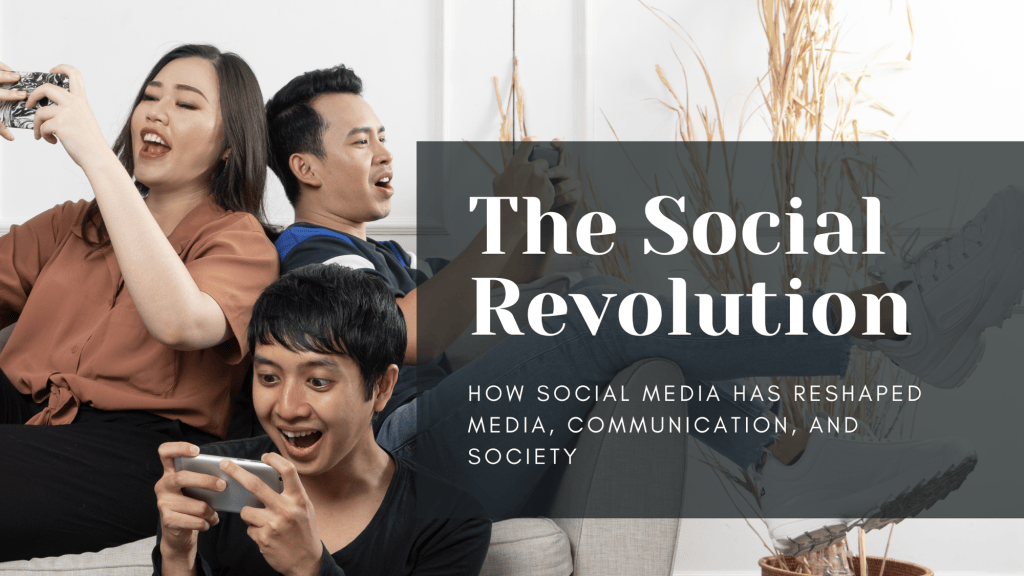
In just a few short decades, social media has revolutionized the way we communicate, consume information, and interact with the world around us. With the rise of platforms like Facebook, X (formally known as Twitter), Instagram, and TikTok, social media has not only reshaped traditional media channels but has also completely transformed our society. From the way we connect with friends and family to the way we receive information, social media has become an integral part of our daily lives. Social media platforms have even become the go-to source for breaking news, with users sharing information in real-time – often before traditional media outlets can catch up. Not only has social media changed the way we receive news, but it has also given rise to a new era of communication, allowing individuals from all corners of the globe to connect and engage in meaningful discussions. In this article, we will uncover the profound impact of the social media revolution, delving into how it has reshaped media, communication, and society as a whole. Together, we will analyze the positive and negative effects of this digital phenomenon and explore the ever-evolving digital landscape.
The impact of social media on traditional media channels
Social media has undeniably revolutionized the way we consume and interact with media. The impact of social media on traditional media channels is astonishing. In the past, people relied heavily on traditional media outlets such as newspapers, television, and radio for news. However, with the rise of social media platforms such as Facebook, Twitter, and Instagram, the landscape has dramatically changed. One of the most significant impacts of social media on traditional media channels is the speed and reach of information dissemination. With social media, news can spread like wildfire, reaching millions of people within seconds. Traditional news outlets are limited to broadcasting on their designated channels, while social media content creators can potentially reach a worldwide audience. This has challenged traditional media outlets to adapt and keep up with the demand for real-time updates and breaking news.
Social media has also given individuals the power to become content creators and broadcasters themselves. Anyone with a smartphone and an internet connection can now share their thoughts, opinions, and experiences with the world. This has democratized the media landscape, allowing for the visibility of perspectives that were previously marginalized or excluded. Dating back to around 2014, there was an explosion of documented instances of police brutality in the U.S. These videos were able to reach many people across the nation, allowing everyone (even people outside of the country) to able to bear witness to the atrocities that people
Social media has disrupted traditional advertising models as well. In the past, companies relied heavily on television, print, and radio advertisements to reach their target audience. However, social media platforms have provided a more personalized and targeted approach to advertising. Advertisers can now tailor their messages based on users’ demographics, interests, and online behavior, leading to more effective and efficient advertising campaigns. Even content creators are able to become influencers, partnering with companies to review and market products and services to their own audience. According to statistics at Marketing Scoop, 92% of consumers reported that they trust recommendations from influencers more than traditional advertisements or celebrity endorsements. Unironically, the influencer marketing sector is shifting from experimental to foundational in many companies’ marketing strategies.
Unfortunately, the impact of social media on traditional media channels is not without its challenges. The rise of fake news and misinformation has become a significant concern. Social media platforms have become breeding grounds for the spread of false information, which can be detrimental to public trust and the integrity of journalism. Traditional media outlets now face the challenge of distinguishing themselves as reliable sources of information in an era of widespread skepticism.
Ultimately, social media has significantly reshaped traditional media channels. It has altered the way news and information are disseminated, empowered individuals to become content creators, and transformed advertising practices. While social media has brought about many positive changes, some of the challenges will need to be addressed for a more responsible and informed media landscape.
The influence of social media on communication patterns
Social media has completely transformed the way we communicate and interact with one another. In the past, our communication was limited to face-to-face interactions, phone calls, and emails. However, with the rise of popular social media platforms, communication has become more instantaneous and widespread. One of the most significant influences is the speed at which information travels. With just a few clicks, we can share news, photos, and updates with our entire network of friends and followers, regardless of their location. These days, communication is faster and more efficient, allowing us to stay connected with people from all corners of the globe. Another impact of social media on communication is the shift towards visual content. Platforms like Instagram and Snapchat have popularized the use of images and videos as a means of communication. We can now capture a moment or express our thoughts through a single image or short video clip. This visual form of communication has made it easier to convey emotions and experiences, adding another dimension to our interactions. Additionally, social media has given virtually everyone a voice and a platform to express their opinions. In the past, traditional media outlets controlled the narrative, deciding what information was disseminated to the public. Now, with social media, anyone can share their thoughts, ideas, and experiences, leading to a more diverse and inclusive conversation. This has also allowed marginalized groups to amplify their voices and shed light on important social issues.
However, this liberal structure has brought about challenges in communication. Misinformation is becoming a great concern in countries that allow their citizens liberal access to social media. According to a study facilitated at Hasanuddin University in Indonesia, disinformation spreads six times faster than accurate information. This is mainly due to content creators invoking outrage, fear, and shock in order to get more engagement. It is crucial that we use social media responsibly and critically evaluate the information we share and encounter. It is a generally good practice to do the following when you encounter new information online:
- Fact-check every claim! Use tools like Google to compile multiple articles and sources of data in order to cross-check the information.
- Think before sharing: avoid impulsive engagement, which could further lead to the spread of misinformation.
- Read beyond the sensational headlines: journalists have mastered the art of exaggerating headlines for shock value so it is best to read the entire article before engaging.
With the rise of online anonymity and access to connections across the globe, cyberbullying and hate speech have become notable risks. You may think that teens are more vulnerable. However, with the wide-spread use of social media, adults are just as vulnerable. There are people who have realized they can say whatever they want to whomever they want without immediate consequences. This is, unfortunately, the down-side to social media empowering everyone to speak their mind. However, there are ways to deal with cyberbullying and hate speech:
- Utilize the block feature! Sometimes it really is that simple.
- Log off: take time away from social media and interact with people in the real world.
- Report malicious account(s) from the social media platform you are using.
- Bonus: There have been instances in which individuals practicing cyberbullying and hate speech were reported at their place of employment and lost their job. This is a bold move but many companies have social media policies in place to protect the company’s image, thus leading to individuals being held accountable for their social media use while associated with that company.
Overall, social media has revolutionized communication patterns by making it faster, more visual, and more inclusive; it has connected people on a global scale. As we continue to navigate this social revolution, it is essential to harness the power of social media for positive change and to foster meaningful connections in an increasingly digital world. Most importantly, we must continue to educate ourselves as the world of social media continues to expand and develop.
The societal effects of social media
Another significant effect of social media is its ability to connect people from all corners of the globe and all walks of life. It has transformed the way we build and maintain relationships, allowing us to stay connected with friends and family regardless of distance. Social media platforms have become virtual communities where individuals can share their thoughts, experiences, and opinions in real-time. Moreover, social media has empowered individuals to express themselves freely and connect with people they may have never encountered outside of social media. Families have been able to connect with long lost loved ones from a picture or status posted on Facebook. It has provided a platform for activism and social change, amplifying important social and political movements. From the Arab Spring to the #MeToo movement, social media has played a pivotal role in mobilizing and organizing communities, sparking conversations, and demanding greater accountability.
However, there are negative aspects of social media’s societal impact. Not only has it been associated with the rise of online harassment but the addictive nature of social media can also contribute to decreased productivity, mental health issues, and a distorted sense of reality. The constant comparison and validation-seeking culture that social media perpetuates can lead to feelings of inadequacy and low self-esteem, which has only recently become a concern. The irony is that social media users can portray almost anything they want, even if it doesn’t match their real life. Catfishing is a drastic example of how people can completely misrepresent themselves online by using stolen or altered images.
The societal effects of social media are complex and multi-faceted, yet mainly a mystery. As social media continues rapidly evolving, we do not yet know some of the long-term effects of our social media usage. As we continue to navigate this ever-evolving digital landscape, it is crucial to critically examine and be mindful of the ways in which social media impacts our lives and society as a whole. In the meantime social media users can implement healthy practices like a phoneless bedtime routine, breaks from social media, and outings with loved ones to keep them balanced and grounded in reality.
The evolving digital landscape and future trends
As we look ahead, it is important to understand the evolving nature of the digital landscape and the future trends that will continue to shape it. One major trend that we can expect to see is the continued integration of social media into various aspects of our lives. Social media platforms have become more than just a way to connect with friends and share updates. They have become powerful tools for businesses, organizations, and individuals to reach and engage with their target audiences. As a result, we can anticipate more businesses investing in social media marketing strategies to stay relevant and competitive. Additionally, we can expect social media platforms to continue expanding their features and capabilities. With the rise of live streaming, augmented reality, and virtual reality, social media is becoming more immersive and interactive. This opens up new possibilities for content creation and engagement. We may see more brands and influencers utilizing these innovative technologies to create unique and engaging experiences for their followers.
Furthermore, privacy and data security will remain at the forefront of discussions surrounding social media. As users become more aware of the potential risks associated with sharing personal information online, platforms will need to prioritize data protection and transparency. Stricter regulations and policies may be implemented to ensure the safety and privacy of users’ data. However, in the meantime, users should practice on my safety and remember that it is each individual’s responsibility to protect their privacy.
Lastly, the influence of social media on shaping public opinion and driving social change will continue to grow. We have witnessed social media’s role in mobilizing and organizing movements, shedding light on important social issues, and giving marginalized voices a platform. As social media continues to evolve, we can expect it to have an even more significant impact on shaping the narrative and driving societal change. In conclusion, the evolving digital landscape presents exciting opportunities and challenges. Social media will continue to play a crucial role in reshaping media, communication, and society. By staying informed about emerging trends and adapting to the evolving landscape, individuals and businesses can harness the power of social media to thrive in the social revolution.


Leave a comment